Skip to content

ProductsProSense One

The readings before the defect shows

When a defect only shows after the oven, the readings from before are usually missing. The case rides the line with the part and records temperature, humidity and air velocity zone by zone.

ProSense One, measurement case for the paint line

See which zone a value slips in

A run shows, zone by zone, which channels measure there, from the booth to the dryer. That way every value comes with the place it was taken.

Channels by zone

  • Spray booth

    • Booth temperature°C
    • Humidity% RH
    • Air velocitym/s
  • Flash-off zone

    • Air temperature°C
    • Humidity% RH
  • Dryer

    • Part temperature°C
    • Air temperature°C
16 channels · 1 Hz

Know which value counts at each station

Whether the flash-off zone ran too warm or the oven missed its curve usually only shows in the defect. The TPA defines which value is checked at each station. ProSense One supplies the readings for it.

What the TPA requires, zone by zone

TPA requirementProSense channelSource
Downdraft above the partAir velocityTPA 3
Air temperature in the flash-off zoneTemperatureTPA 3
Part temperature in the dryerPart temperatureTPA 6

Analyse with your own tools

Every run is stored on the SD card and exports as CSV, for Excel or your own analysis.

Exporting a run

Export CSV ZIP

One file per quantity, one column per channel

  • Temperature.csv
  • Humidity.csv
  • AirFlow.csv

Also in the archive

README.txt · metadata.json

Semicolon-delimited, German decimal format

  • 32 GB SD card, CSV
  • WLAN + USB-C

Inside the case

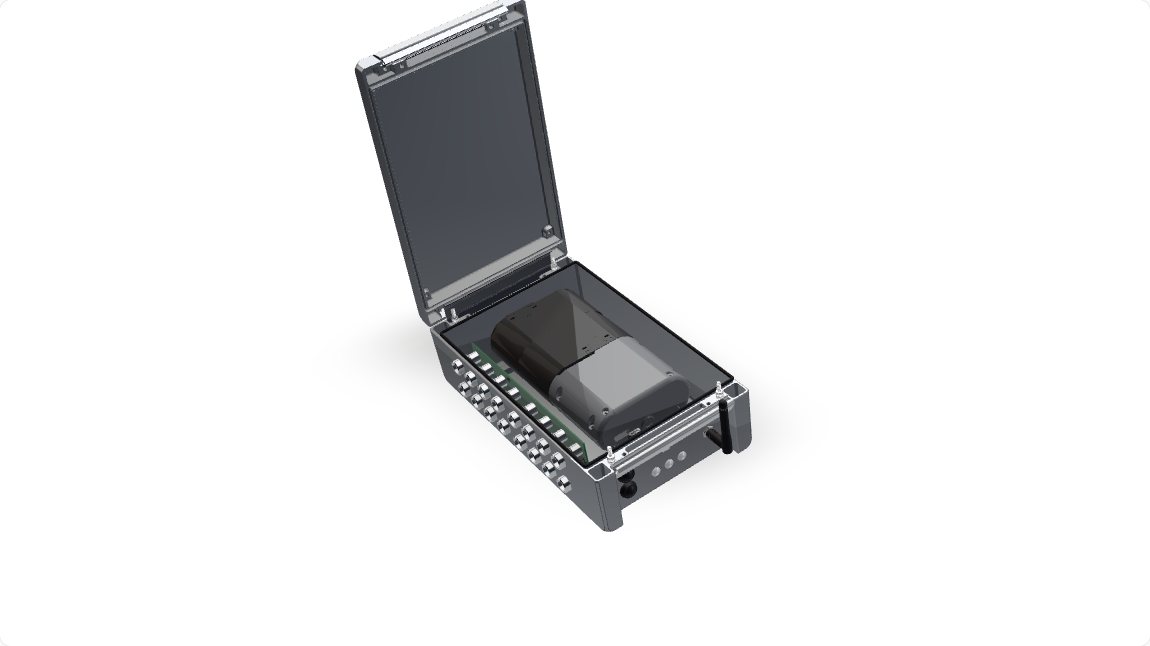
The case is open. You can see what protects the electronics inside, and the stages close it again.

ProSense One, measurement case for the paint line

Assemblies

Enclosure, insulation, sensor ports, electronics and power supply, each with the job it does.

Enclosure

Enclosure body
Cast aluminium shell. Takes the oven heat so the electronics do not.
Lid
Opens on the hinge for service. Carries its own layer of insulation.

Seal

Lid seal
Foamed PU. The line between the electronics and the booth.

Thermal insulation

Insulation, body
Biosoluble mineral wool. The reason the case survives a cure oven with the electronics inside.
Insulation, lid
Sits in the lid and closes the thermal envelope from above.

Hinge and latch

Hinge profile
The axis the lid turns on, across the short end opposite the control panel.
Latch
Clamps the lid onto the seal. Opened by hand, no tool.

Sensor ports

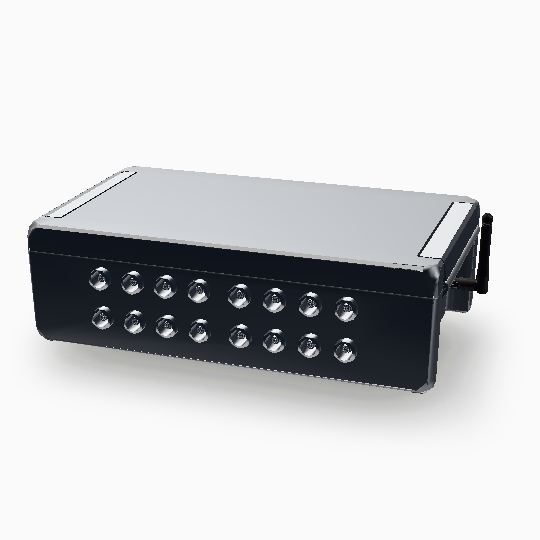
ODU Mini-Snap sensor port
Numbered on the housing. Each takes one probe for temperature, humidity or air velocity.

Electronics

Interface board
Every sensor channel lands here.
Radio module
Carries the WLAN link that streams every channel live during the shift.

Power

Battery
Li-Ion, user-replaceable.
Battery enclosure
A printed housing inside the housing. The battery gets its own thermal shell.

Control panel

Log and stop buttons
Start a run at the rack, end it at the rack. No laptop in the booth.
Status light guides
Bring the status LEDs to the outside without breaching the seal.

Antenna

Antenna
WiFi whip. Folds flat so the case clears the conveyor.

Specifications

Humidity
0–100 % RH±1.8 % RH
Channels and sample rate
16 channels · 1 Hz
Interfaces
WLAN + USB-C
Storage
32 GB SD card, CSV

Further ranges and tolerances appear here once they are confirmed. The datasheet has the latest figures.

All the data in one document

Measuring ranges, tolerances, mechanical data, interfaces and compliance. We will email you the datasheet.

One station, four weeks.

You pick the station where it hurts most. After four weeks we go through real cases together and check whether it helped. If it did not, the pilot ends there.